Once again, Sodom went to Horst Müller’s studio in Berlin, this time to hammer out their first proper album. The band promised to put in extra effort and work more professionally. However, that wasn’t exactly the result, as nightly parties with gallons of beer remained a dominant factor in the recording process. Whether that was the reason for the record label scrapping the recordings entirely remains an open question. Tom: “Once again, a label representative stopped by and said, ‘We can’t release this. This sound is abysmal.’ It definitely sounded worse than In the Sign of Evil.”
Hence, the album had to be re-recorded. SPV/Steamhammer founder/owner Manfred Schütz personally intercepted his protégés on their way to the studio, warning them: “Boys, get your shit together!” And with that in mind, the sessions were supposed to take place in Hilpoltstein, Franconia—in the middle of nowhere—and under strict no-alcohol rules imposed by SPV. In that very same studio, Destruction had recently recorded their second album, Eternal Devastation. Just imagine the villagers’ faces when they saw these curious figures clad in leather and studs, babbling in their Ruhrpott slang, wandering down the streets. The trio, who aimed to please no one to begin with, naturally ignored all the label mastermind’s directives. “We were staying in a small guesthouse where there was absolutely nothing going on,” recalls Tom. “But I was on good terms with the landlady—she’d always leave a crate of beer up in our room for us. We, of course, had to hide the beer from the producer, or we’d have been sent packing. So, we built a fake Marshall decoy cabinet and hid the beers inside of it—the producer never got wind of it.”
When Schütz came to the studio to check up on things, about 300 beer cans came crashing toward him as soon as he opened the front door. He summed it up later in the 2005 Sodom documentary, Lords of Depravity: “If I remember correctly, once leaving the guesthouse, the guys had to relieve themselves and pissed on one of the neighbors’ doors. And I knew right away there would be trouble.”
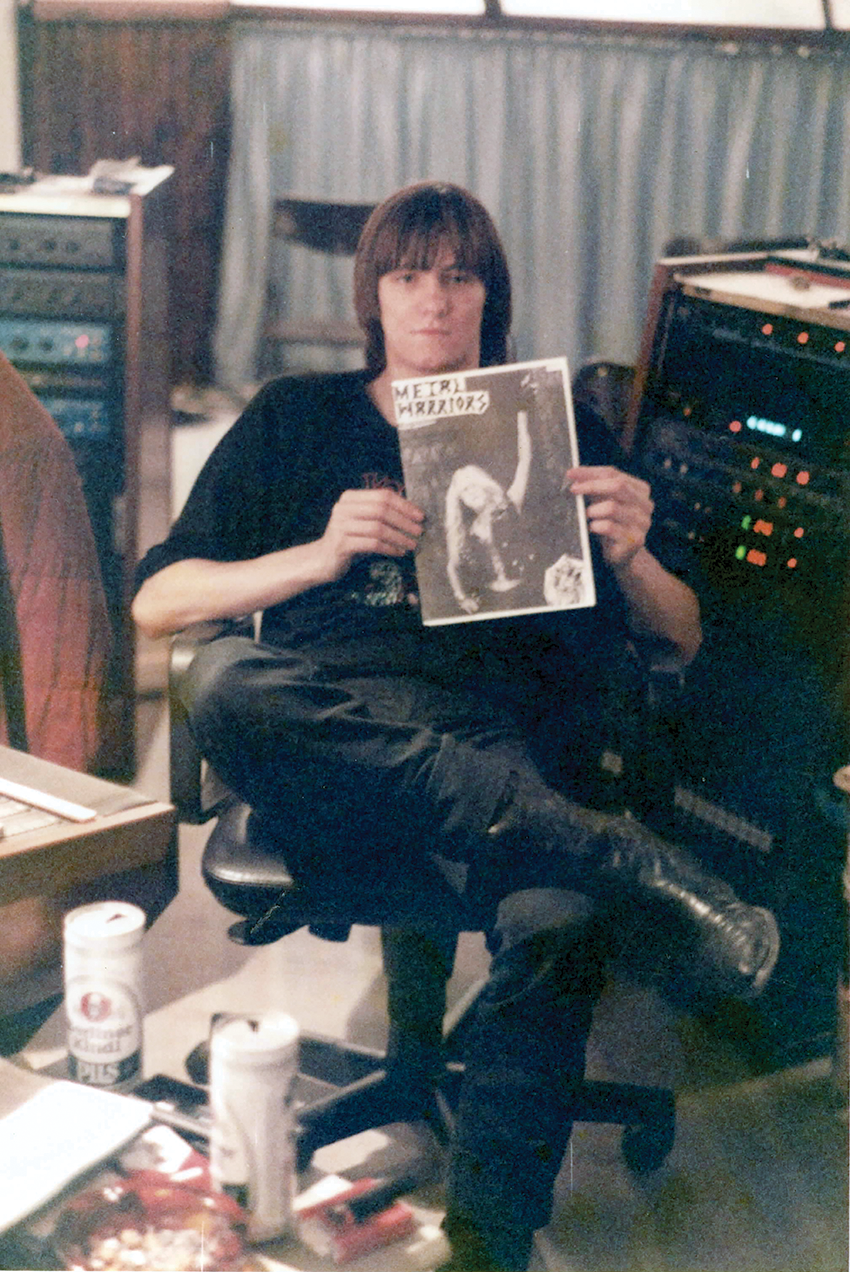
Despite the beer and urine scandals, Obsessed by Cruelty (1986) marked a proper step forward, which was also due in part to the addition of their new guitarist, Destructor. “He was a bit more intricate on the guitar and recorded our first real album, which ended up doing very well,” notes Tom. “Back then, I didn’t even think to tune my bass. Some people love that and claim we went commercial once I did. Of course, other bands like Celtic Frost were already further along, way more professional than us. But the Obsessed album had something special about it. It’s a document of its time for sure. That’s exactly how we were, that’s exactly how we played. Whether the guitars were in tune or not didn’t matter at all. And that has its charm. I stand by it, and I think it’s a shame when musicians disown their old songs.”
Magazines such as Rock Power (issue #6, 1986) acknowledged a “tremendous leap forward,” while Editor Holger Stratmann of Rock Hard magazine noted at least “a slight improvement.” In Metal Hammer’s sales charts, Obsessed by Cruelty reached position five in the July 1986 issue, topped only by giants such as Judas Priest and AC/DC, showing there was indeed a market for such extreme music.
Even more surprising is the fact that Sodom had a second guitarist in their ranks at the time—Darkness axeman Uwe “Assator” Christoffers, who otherwise wreaked havoc alongside drummer Andreas “Lacky” Lakaw at Zeche Carl under the nickname “5-Fingers-Uwe.” He had written the track “After the Deluge” at Sodom’s rehearsal place, which was intended to be recorded as a bonus track, prompting the band to invite him to the studio, just in case. “We had him there as a backup guitarist,” explains Tom, since neither Witchhunter nor he was sure whether Wulf would see the production through. At the time, Lacky was “totally pissed that they snatched Uwe away from us.” Wulf, for his part, didn’t seem particularly thrilled about the dual duty situation and was nervous about playing the songs live.
Still, according to Witchhunter, the recordings were a major step forward: “That was a lot better, almost professional, the way that we performed.” Destructor left the band immediately after the sessions wrapped up. Straight out of the studio, he joined Kreator’s ranks, though he didn’t last long there either, performing only one show with the band in 1986. “I would have liked to try and continue working with him,” says Angelripper. “When you get the chance to talk to each other, a lot can be sorted out. But he plain walked out; he was gone. He seemingly just couldn’t connect with us.” Unfortunately, Destructor’s musical career lasted only a few more years, as he died in a motorcycle accident in 1993.
At least he left behind a classic album as part of his legacy. Obsessed by Cruelty received significant approval from the metal music press. Götz Kühnemund from Rock Hard magazine surprisingly awarded the album 7.5 out of 10 points and noted, “The guitar parts recorded by Michael Wulf (now with Kreator) and a further session guitarist are in no way comparable to the shoddy hackwork of Grave Violator, though of course no strokes of genius should be expected here either. The drum and bass work has also improved, but again, do not expect too much; the song material sounds significantly more nuanced this time around.” Curiously, in a 2016 interview with Rock Hard (issue #355), Destruction frontman Schmier claimed that the solos were recorded by guitarist Uwe “Schmuddel” Hoffmann, who was a member of his side project Headhunter.
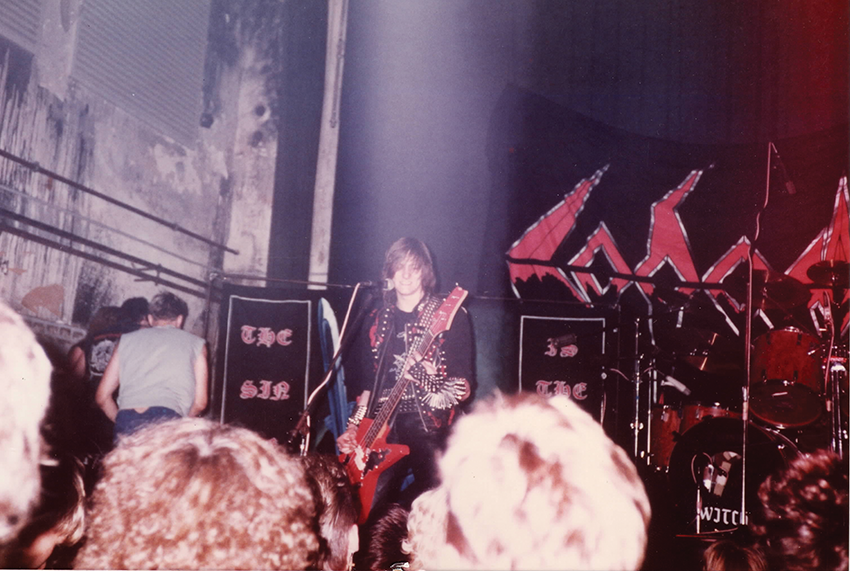
The local scene reacted to the band’s growing profile with some amusement, to say the least. “I can still picture it,” chuckles Kreator’s Ventor. “Sodom had just released their album, and the band was driving past the Mephisto club in their red little Simca with ‘Sodom’ written in large white across the hood. Witchhunter was leaning out the open window, shouting their latest sales numbers out at the top of his lungs: ‘3,000! 3,000 copies sold!’ And Tom was at the wheel, sporting his Bundeswehr buzz cut. It was pretty hilarious.”
Nearly four decades later, Tom remains true to the earliest steps of his musical path: “I still stand completely behind the album. We just listened to the songs again for [40 Years at War – The Greatest Hell of Sodom re-recordings] and tried to figure out how everything was played. It wasn’t easy, but it was interesting.”
Also memorable were the last days of Angelripper’s military service, during which he produced a special calendar to count down the days until freedom. His final day, however, offered his most creative number reveal. Stoney explains: “On the last day, he showed up to one of our parties with a huge blue number sign ‘0’ from an Aral gas station around his neck (he had stolen one of the large number cards used to advertise the current gas prices to passing traffic) and yelled, ‘Zero, you blockheads! MOTHERFUCKING ZERO!!!’—it was unbelievably funny.”
Sodom: The Official Authorized Biography is available now from Decibel Books exclusively here.