Devon Gilfillian was getting ready to get on stage at a show in Portsmouth, New Hampshire, when he received unsettling news that his father had suffered a heart attack.
After powering through the show, he flew back home to Nashville the following morning, where his dad was in stable condition. “They put some stents in him. He’s good now and going to the gym,” Gilfillian tells Rated R&B. “It was crazy that he had a heart attack because he’s always been such a clean eater and taking care of himself, but he’s good.”
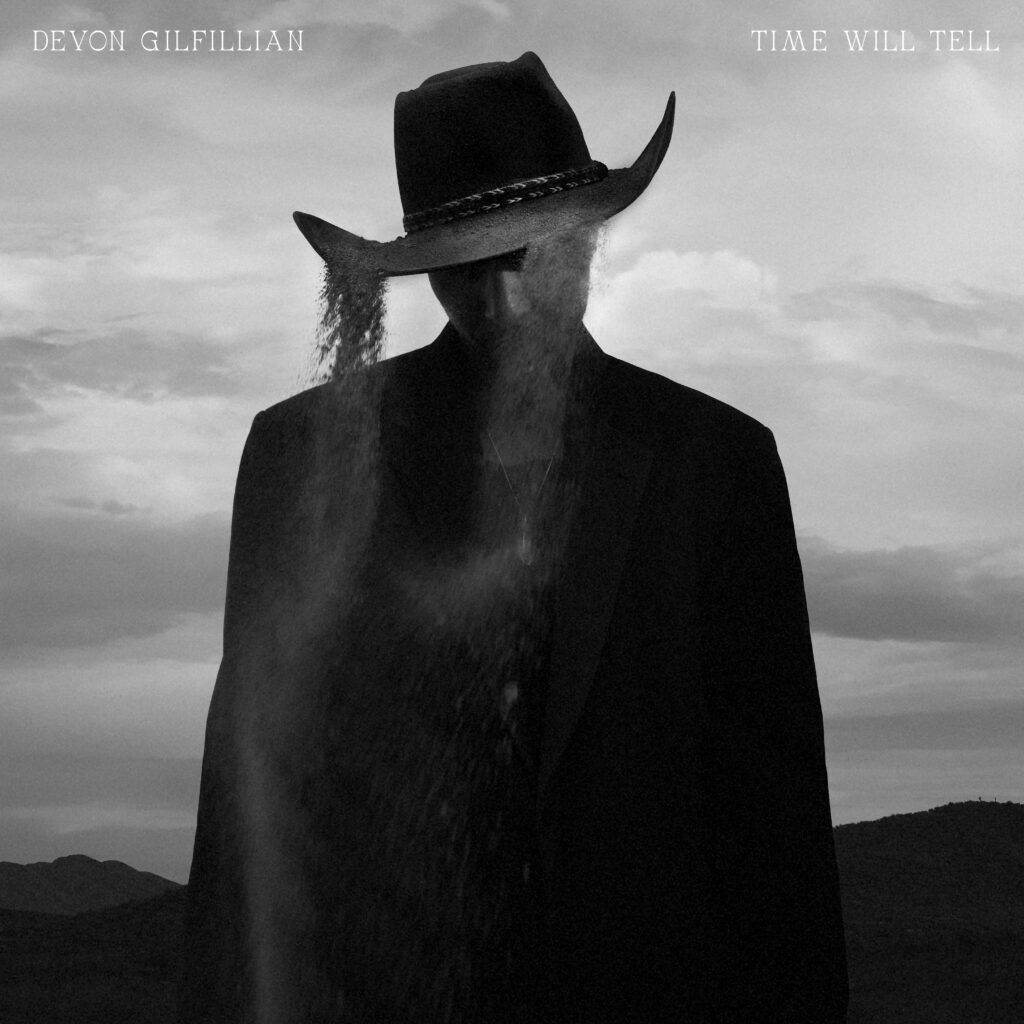
With heavy emotions still weighing on him, Gilfillian found himself in the studio weeks later, where he wrote “Glad To Be Here,” the centerpiece to his third album, Time Will Tell. “That song is about how grateful I am that I have my mom and dad here in Tennessee — they moved down from Philly — and how mortality is real,” Gilfillian says of “Glad To Be Here.” “We only have so much time on this earth, so hold the people that you love close.”
Making “Glad To Be Here” unlocked a portal for Gilfillian to contemplate more about time — the time spent with himself and others and knowing when time has run its course for certain relationships. “To me, ‘Glad To Be Here’ is the beginning of this album. It sparked the feeling of this album in a big way, of just gratitude for this life that I have, that I get to make music for a living.”
Gilfillian started working on Time Will Tell in early 2024, following his headline tour for his sophomore album, Love You Anyway. The latter project, released independently after his major-label debut, Black Hole Rainbow (2020), was a call for unity amid the growing fog of division. “I was sick and tired of everything that was happening,” Gilfillian recalls. “[Love You Anyway] was a reflection of the polarization of the country and trying to forgive people I was pissed off at during that time.”
Whereas Love You Anyway held its arms outward to express joy, Time Will Tell turns inward. Recorded at Nashville’s iconic RCA Studio A, the latter album is a snapshot of the last two years of Gilfillian’s personal life that chronicles the wither and bloom of romance and the moments in between that pause for self-reflection. The lead single, “Hold On (Hourglass),” attempts to stall the approaching finish line of a relationship.
Meanwhile, “Let’s Stop F******g Around” is a desperate plea to avoid wasting time courting each other when the chemistry is undeniable. Sonically, Gilfillian stays rooted in his genre-bending instincts. Time Will Tell collides the worlds of Philly soul, cinematic country, psychedelic funk and classic Afrobeat into a universal soundscape.
First off, I’m happy to hear your father is doing well. When he experienced his health scare, did it change your own perspective on time?
My dad’s heart attack showed me how precious time is. It’s the most precious commodity we have. Money is not; time is. Our time we give to people is so valuable. I’m trying not to waste people’s time. I’ve realized that being a people pleaser, I want people to be happy in the room when I go in, but sometimes I waste my own and other people’s time doing that.
What does Time Will Tell represent for you?
The album is a diary of the past two years of me trying to make a relationship work. At the same time, there are reflections of me falling into a weird depression, coping with my vices and letting the bad thoughts turn into happy thoughts and figuring out the balance after that.
That’s why the album is called Time Will Tell, because that’s how you’ll know…
Exactly, and that’s what it is. You have to see someone through the seasons to really know them. You have to see how they deal with stress and see if they’re recognizing their patterns and dealing with them. If they’re not, are they willing to see it and do the work to not let their trauma pour all over you? This album for sure gives that.
You recorded the album at the iconic RCA Studio A in Nashville. Did being in that space influence the music in any way?
Absolutely. I didn’t really understand country music until I got to Nashville in 2013. Jon Smalt, my drummer and manager, was like, “Yo, listen to this album: Sturgill Simpson’s Metamodern Sounds in Country Music.” I put it on, and he was doing this version of psychedelic country music reminiscent of Waylon Jennings and Willie Nelson in the outlaw country scene. That opened up this whole other side of music that I never thought I would like, but fell in love with. That influenced my first EP. But Stevie Wonder was one of my North Stars because of my dad. Then Jimi Hendrix, because of the guitar. Jimi took me to The Isley Brothers, and then I fell in love with Otis Redding. I’m such a melting pot of music.
When I put my EP out, we were talking to Dave Cobb, who had produced for Sturgill Simpson and Chris Stapleton, and was trying to sign me. It didn’t work out, but he was working at RCA Studio A and brought us in. We’re like, “Wow, it’d be insane to record here.” That was in 2017. Fast forward eight years, my buddy Mike Bozzi, who engineered Time Will Tell, was like, “We need a studio,” because I wanted to capture a nostalgic sound of Bill Withers and Jimi Hendrix and mix that with Nick Hakim and all these other [influences].
We put pedal steel [guitar] on “Glad To Be Here” and “Shines in You.” To me, that came from the influence of Sturgill and Willie, being in Nashville and being at RCA Studio A. The soul that comes out of Nashville has seeped into my music, which I’m glad I’ve taken just one little spice out of the cabinet I love and was like, “You know what? I think this would be good in this soul dish.”
Regarding Time Will Tell, you said, “In this age of AI, I wanted to make something raw, organic, with the cracks.” How did you balance rawness with any refinements you made?
I love that question because we recorded the song “Time,” for example, in one take, and we didn’t mess with it. For a lot of the other songs, I wanted to redo the vocals. For the rhythm section, we recorded most of the instrumentation to tape so I couldn’t f**k with it afterward. I wanted the chemistry of the band to be baked into the feel of the music. That is where the rawness comes from. I’m not auto-tuning all the things. I’m trying to lay down as raw and organic as I can.
On “IRL,” you yearn for physical connection. In this age of social media, apps and artificial intelligence, how do you balance staying rooted in your day-to-day?
I’ll be honest with you: I just binge-watched the shit out of Invincible. When I get off tour, I’m just a blob. When I’m at my healthiest, I’m getting up, stretching, doing yoga and going to the gym. Getting into my routine really grounds me. I don’t respond to people until after 11 a.m., unless it’s an emergency. I’ll text my girlfriend, “Good morning.” But giving myself that space allows me to be present for the day.
What inspired you to write “IRL”?
There’s definitely some sexiness in there. It pertains to the world of online dating as well. You can meet fun people and crazy people on there and have some stories, but at the end of the day, we’re not meant to be connected to thousands of random people. We only have the capacity for so many people in our little circles. So to me, it was just yearning for a real connection. Ironically, I met my girlfriend through Instagram.
You tend to blend genres in your music, and this album is no different in that regard. “Moonflower” leans into your Philadelphia soul roots. What did you want to achieve with this record?
“Moonflower” is basically about my ex in the sense that I was a morning person. She was a night person, and we were always missing each other. That wasn’t the only reason we didn’t work out, but it was one of them. I was always trying to sync up with her and never could. This song is about trying to love someone who’s the opposite of you and trying to make it work. It didn’t work out, but in the song, there’s an open ending.
When I listen to Time Will Tell, it kind of takes me back to your debut album, Black Hole Rainbow. You even have a track on the new album called “Black Dog Rabbit Hole.” Is there a connection between the two?
I feel that for sure. There’s a lot of similar reflection in Black Hole Rainbow and Time Will Tell. “Black Dog Rabbit Hole” is about falling into depression and trying to get yourself out. Black Hole Rainbow is the idea that you have to go through the darkness to get to the other end, which is the beauty. “Black Dog Rabbit Hole” was going into a vortex of “I’m sad. Let me smoke all the weed, eat all the Eggo waffles, and whatever it is to get out of it.” To me, “Black Dog Rabbit Hole” is Rage Against the Machine, Radiohead, Jimi Hendrix and angry stacks of guitars I love.
How did you climb your way out of that depression?
Music is one way I can vent but also moving my body. I have the back of a 90-year-old. I have three herniated discs and a ruptured disc. So I have to stretch every morning, or else I walk like a penguin and feel like shit. If I’m being good, I will go to the gym or for a walk. I have to admit to myself, “Yeah, I’m definitely a pothead for sure. But I shan’t smoke pot all day because then I’ll feel like shit. Maybe have it later on because I know I’m going to crash. Maybe that’s why you’re feeling sad, buddy boy. Maybe you shouldn’t do that.” So, just trying to be self-aware.
But also to each their own, knowing yourself, knowing myself, being self-aware and not numbing away the self-awareness too, and knowing that you need to find a moment to have a sober mind to reflect: “Why are you doing these things and feel like you need to self-medicate in this way?” Listen, everyone has their vice, no judgment. There will come a season where I’ll very much have to moderate what I’m doing, and I’m all right with that reckoning.
What do you want listeners to take away from Time Will Tell and what did you take away from it?
I hope listeners get to know me a little more and get to know and love the songs. I hope they can relate to them. I hope it brings people peace. It definitely was cathartic for me. I don’t want it to be a painful thing to listen to. Sometimes I listen to it, and I’m like, “Oof.” But I can also look back at it as a snapshot of my life and take with me the gratitude I’ve acquired from that moment.
Feature Image Credit: Travys Owen
Stream Devon Gilfillian’sTime Will Tell here.