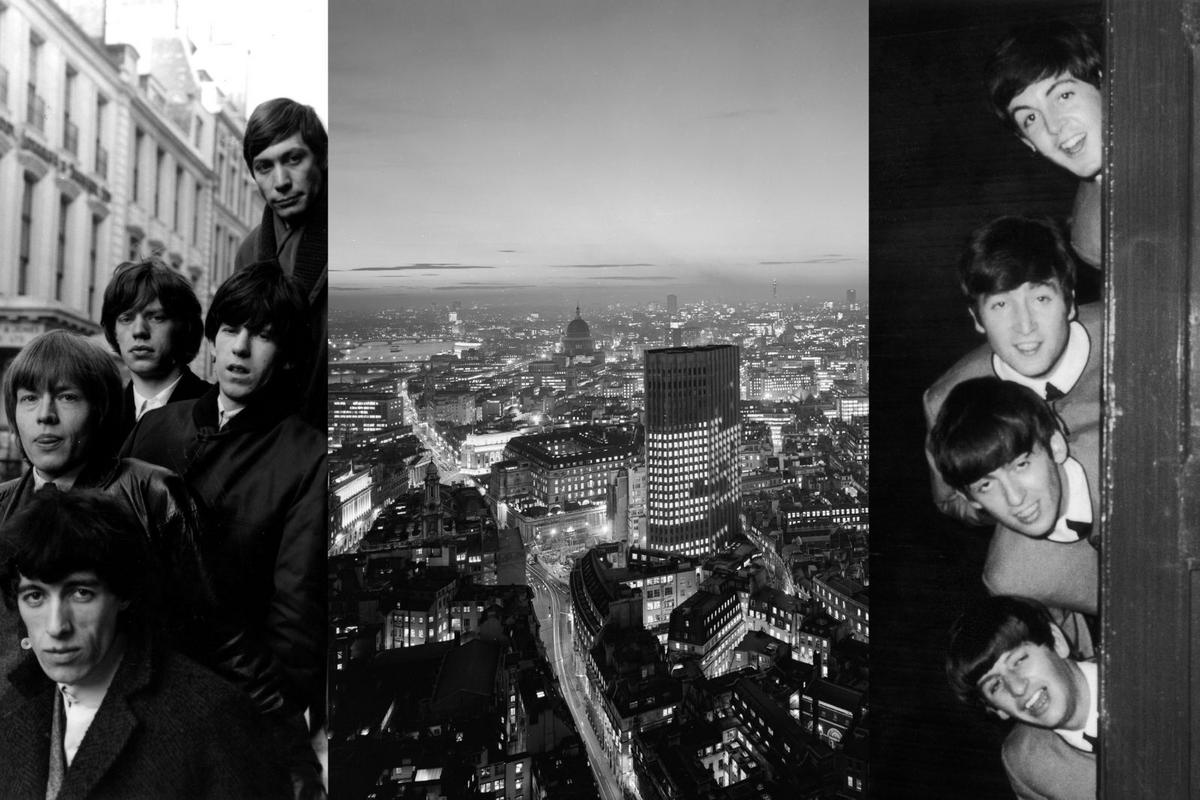
In April of 1966, the American magazine Time ran a story titled “London: The Swinging City,” which described the burst of creativity and youthfulness that was running through the capital of the U.K.
Seemingly overnight, a seismic shift had occurred in terms of fashion — all hail the mini skirt! – art, music and general society. The mod and psychedelic subcultures bubbled up to the surface complete with go-go boots, geometric-patterned clothing and lots of polyester. Many of the young people leading this charge had grown up right under the shadow of World War II – it was time to let loose a little.
Music in particular played a huge role in this. At any given moment, one could tune into programs like Radio Caroline, Wonderful Radio London and Swinging Radio England to hear what became known as “the London sound.” The best part was that the bands and solo artists making this sort of music appeared to be average, working class kids from backgrounds not at all unlike their listeners’ own. Here was music made by young people for young people.
The artists that came out of this location and period of time created a movement that still gets emulated today, and below are the four we believe were its most prominent leaders.
1. The Beatles
There is no swinging London without the Beatles. Though they formed in Liverpool, it was only a few years later that the band members moved to London homes in an effort to gain a smidge of privacy as Beatlemania swirled around them.
The vast majority of the Beatles’ catalog was recorded in London, more specifically at Abbey Road Studios in the St John’s Wood area of the city. It was there that original drummer Pete Best was replaced with a young man named Ringo Starr, producer George Martin began a long and storied partnership with the band and, of course, the cover image of Abbey Road was taken. In another part of town was the Apple Corps building at 3 Savile Row, where the band conducted business and performed their very last live show — on the roof, no less.
In essence, the Beatles were synonymous with the exuberant atmosphere of London in those years, even after they retired from touring and chose instead to focus on recording. Swarms of fans followed their cars and hung out in front of their headquarters, which earned them the nickname “Apple Scruffs.”
If there was ever any doubt that the Beatles’ decision to be based in London was an impactful one,just make avisit to the city — every day people line up to have their photo taken in the style of Abbey Road at the same crosswalk the Beatles used.
2. The Rolling Stones
Well, you probably saw this coming. The Rolling Stones were the Beatles’ foil and vice versa.
Unlike the Beatles though, the Rolling Stones came from London directly, which may have explained their grittier personality. From the onset, the Stones drew from old blues influences like Muddy Waters, Howlin’ Wolf and Bo Diddley, trying the sound out for size in small, smoke-filled London clubs.
In the Stones was something entirely different from the Beatles. Mick Jagger, the flamboyant and dashing frontman whose singing was only outshone by the way his body gyrated across stages like a rock ‘n’ roll acrobat, kept audiences mesmerized. His partner in crime and songwriting, the enigmatic Keith Richards seemed to have been born with a guitar in his hands — he often took strings off the instrument to create more impactful chords and chart-ready licks came to him, literally, in dreams. Meanwhile, Charlie Watts, a quiet fellow by nature, kept a steady beat behind them with a jazzman’s flair. The Rolling Stones were raw, unapologetic and deeply rooted in their influences, and they didn’t so much compete with the Beatles as complement them.
Eventually, other London-based bands would draw even further on those same blues inspirations, but as far as the ’60s went, the Stones were the undeniable kings of it.
READ MORE:32 Songs the Rolling Stones Have Rarely Played Live
3. The Who
Not very long after the Stones formed in London, so too did the Who, featuring vocalist Roger Daltrey, guitarist Pete Townshend, bassist John Entwistle and drummer Keith Moon.
Like many of their peers, the Who were inspired by both the blues and early rock ‘n’ roll, but there was something different about them. Daltrey, for one, could out-sing just about anyone, with a wide range to his voice and the stamina to use it for hours on end. Townshend’s use of power chords, feedback and general volume would later influence genres like power pop and punk. Entwistle had formal music training and could play, in addition to bass, various brass instruments. And the ferocious Moon might best be likened to Animal, the Muppet, and we mean that in the best way possible.
By the time the ’60s ended, the Who had covered an awful lot of ground from songs like “My Generation” and “Substitute,” which spoke to the youth counterculture of the time, to 1969’s Tommy, a profound concept album that led the way in terms of opera rock and character-based albums. One could certainly argue that the ’70s were an even better decade for the Who, but it was their work in the ’60s that set them apart.
4. The Yardbirds
Looking back, it’s a bit surreal to think that three of the most respected guitarists in rock were, at different points, members of the same band. Jeff Beck, Eric Clapton and Jimmy Page, all of whom went on to even bigger careers, all played in the Yardbirds at one time or another.
Similar to the Stones, the Yardbirds were a blues-based band, but they took things in a more psychedelic direction with heavier and longer “jam” sections in their music. Not that they sacrificed quality for volume — the Yardbirds, for however intense some of their music may have been, didn’t just blast their way through. Using distorted, fuzzy sounds, their songs eventually laid the groundwork for early metal and hard rock musicians like Led Zeppelin, Black Sabbath and Deep Purple. They became famous for what was deemed “rave ups,” a sort of frantic instrumental break that excited live audiences and also somehow worked on recorded albums.
Experimentation was the name of the Yardbirds’ game – if Page wanted to use a violin bow on his electric guitar, why not? That was the beauty of the ’60s in London, after all, an era of breaking boundaries and thinking outside the box. Or as Page put it to Rolling Stone in 2012: “The colors were starting to show in the palette.”
The Who Albums Ranked
Half of the Who’s studio albums are all classics, essential records from rock’s golden age. But where should you start?
Gallery Credit: Michael Gallucci